A Moment in the Clinic: What Healing Actually Looks Like
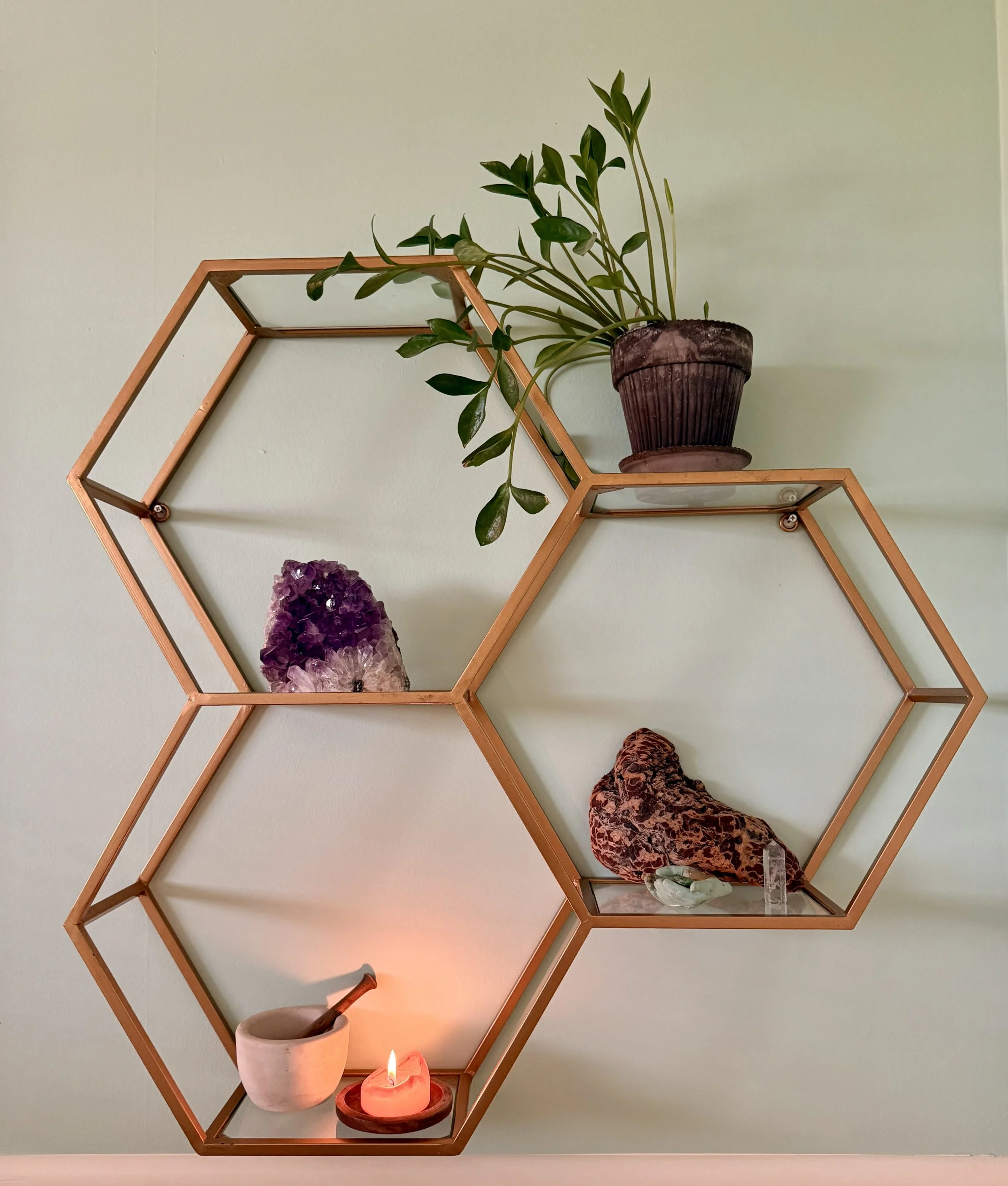
This is the atmosphere I work with intention to create — warm, slow, safe, and ready for whatever your body is holding.
A glimpse into how healing unfolds in my treatment room
Some days in the clinic, the work is far less about needles and far more about listening.
Not the listening we do with our ears — but the kind we do with our presence, our attention, our sense of the subtle. The kind of listening where the body reveals truths long before the mouth ever speaks.
This kind of listening didn’t come from school.
It came from sitting with hundreds of bodies over the years, noticing patterns, noticing the way someone’s whole system will tell me the truth even when their words are trying to stay polite or functional or “fine.”
It came from my own lived experience of what it feels like to be held gently, versus managed or rushed or misunderstood.
It came from watching people walk through the door with more history in their tissues than they’ve ever said out loud.
Last week, someone came in and said:
“I think I’m just stressed. I shouldn’t be this overwhelmed. Nothing is actually wrong.”
But as soon as they sat down, I could feel the story underneath the sentence.
Their breath was tight and held too high in the chest.
Their shoulders were pulled slightly forward as if protecting the heart.
Their eyes scanned the room in tiny, rapid movements like they were waiting for the next impact, the next alarm, the next thing that demanded “survival mode.”
Most people apologize for being sensitive.
Most people don’t realize how loudly the body speaks.
I’ve seen this a thousand times.
It’s not “just stress.”
It’s a nervous system that’s been running a marathon with no finish line.
It’s a body that had to learn vigilance to stay safe.
It’s exhaustion dressed up as normalcy.
And the truth is — people often don’t come to acupuncture because they’re relaxed and thriving.
They come because they’re carrying too much.
They come because they’re tired of being tired.
They come because they’re holding their breath through their entire lives and they don’t know where to set it down.
They come because they need a place where their system doesn’t have to perform.
So instead of convincing them they were okay…
I met them where they actually were.
We didn’t start with needles.
We started with the body’s first language: contact.
One hand under their skull — the place where the nervous system whispers its deepest truths.
One hand on their diaphragm — the gatekeeper of held emotions, unspoken grief, and the breath we forget to take.
We didn’t rush.
We didn’t “do” anything.
We just waited.
And I tracked their system the way you might track a bird — gently, attentively, without force, without expectation.
This is the part of my work most people never see.
It’s the subtle, relational space where healing actually begins — the moment when the body realizes it’s no longer alone in holding everything.
Sometimes this takes 30 seconds.
Sometimes it takes much longer.
Every body has its own pace, its own language, its own threshold of trust.
And honoring that pace is part of the medicine.
There was a moment — and it’s always subtle — when something shifted.
The breath dropped half an inch lower.
The jaw softened.
The scanning in the eyes paused, like a tide pulling back.
The body recognized: Oh. It’s safe here.
Only then did I bring in needles.
Not to override anything, not to “fix” anything, but to support what was already happening — the slow unwinding of tension that had been held for too long.
A point for grounding.
A point for unwinding the diaphragm.
A point to help the nervous system reorganize into something steadier, less electrified.
At the end of the session, they sat up slowly, blinked a few times, and said:
“I feel like someone turned off the electricity in my brain.”
That’s the work.
That’s why I do this.
People think acupuncture is about pain or meridians or single symptoms — and yes, it can absolutely help with all of that. But the real work is relational.
Your body tells me a story through breath, pulse, fascia, tone, subtle holding patterns — and my job is to listen, interpret, and meet you exactly where you are.
This is why I blend acupuncture with:
Integrated Touch Therapy
cranial work
fascia unwinding
tuning forks
trauma-informed presence
nervous system tracking
Because healing isn’t a technique.
It’s a conversation.
It’s a moment of feeling met, not managed.
It’s the body remembering a rhythm it never actually lost — just buried under all the ways it had to adapt.
And honestly — this approach is personal for me.
The kind of care I offer is the kind I wished existed when I needed it most.
Care that doesn’t rush.
Care that doesn’t pathologize sensitivity.
Care that sees the whole person, not just the symptom.
Care that understands healing isn’t linear, and safety isn’t a given; it’s created.
Every day in the clinic I’m reminded of something simple and sacred:
People are not problems to solve.
They are bodies longing for safety, connection, and room to breathe.
That’s what I hope True Nature Wellness is —
not just a place to address symptoms,
but a place where your system can finally exhale.
Come as you are.
Your body already knows the way home.
I’ll meet you there.