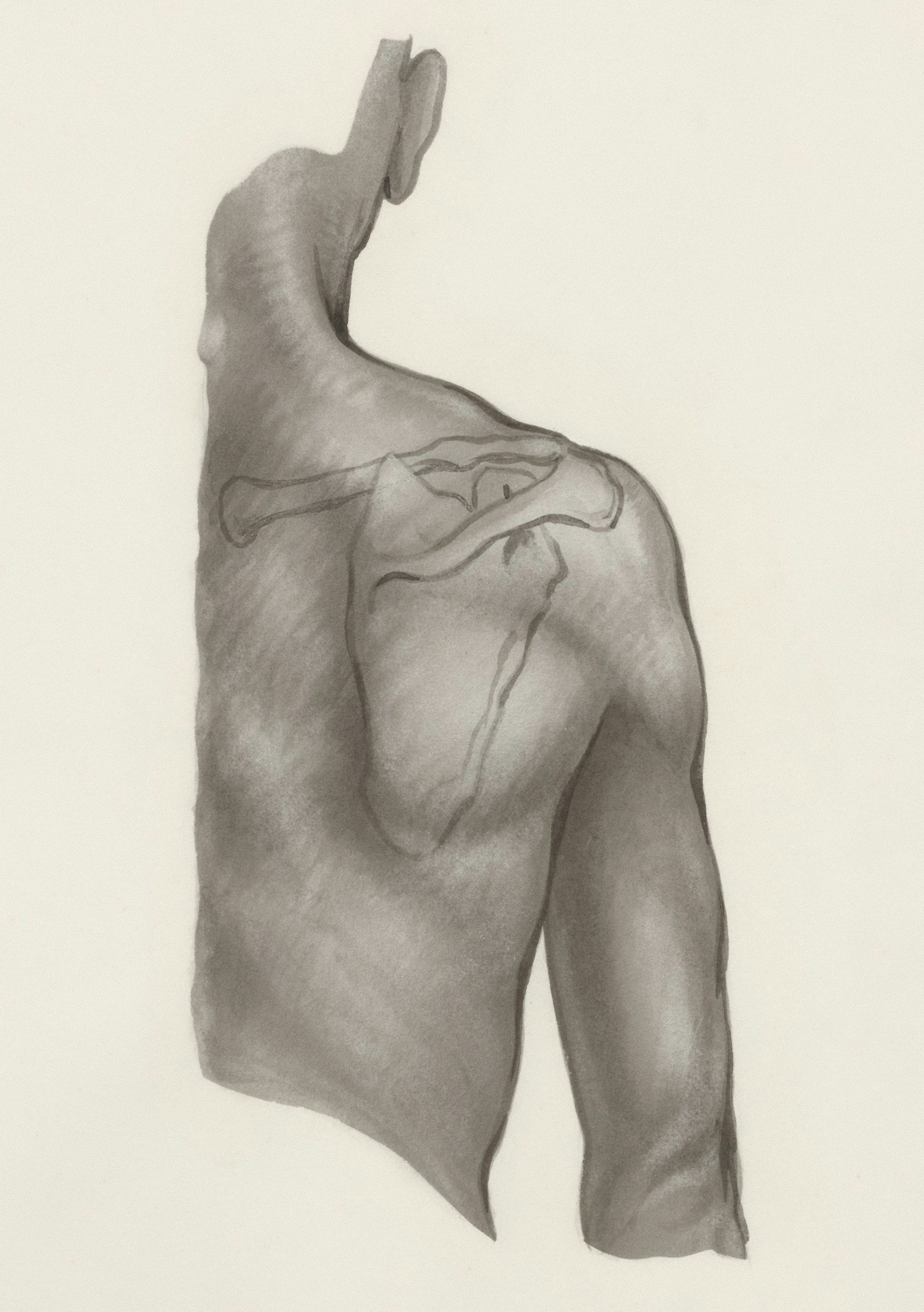
Good treatment starts with figuring out what the shoulder is actually asking for.
Understanding Shoulder Pain
Shoulder pain can show up in a lot of different ways. You might have pain reaching overhead, putting on a jacket, reaching behind your back, lifting something, or sleeping on that side. Sometimes it starts after an injury, and sometimes there’s no obvious moment when it began.
You may feel the pain right at the shoulder joint, down the outside of the upper arm, around the shoulder blade, or into the neck. That difference matters, because not all shoulder pain is coming from the same place.
At True Nature Wellness in Sebastopol, I use acupuncture and integrative bodywork to treat shoulder pain, but I also spend time figuring out what the shoulder is actually doing. Where you feel the pain is important, but it’s only one part of the assessment.
Shoulder Pain Isn’t Always Just About the Shoulder
The shoulder is a very mobile joint, and that mobility depends on a lot of structures working together.
The rotator cuff muscles stabilize the joint while you move. The shoulder blade needs to glide and rotate appropriately. The muscles of the chest, upper back, neck, and arm all affect shoulder mechanics. Nerves coming from the neck can also cause pain, tingling, weakness, or other symptoms that are felt around the shoulder or farther down the arm.
Sometimes shoulder pain follows an obvious injury. Other times it develops gradually from repetitive movement, lifting, computer work, exercise, sleeping position, or compensation happening elsewhere in the body.
This is why I don't assume that the place that hurts is necessarily the whole problem.
What Does Your Shoulder Pain Actually Do?
One of the first things I want to know is how the pain behaves.
Does reaching overhead hurt? What about reaching behind your back? Does the shoulder ache at night? Can you sleep on that side? Is there weakness when you lift something? Do you also have neck pain or tension around the shoulder blade?
I also want to know whether the pain changes when you move your neck, whether the arm moves differently when someone else moves it for you, and whether the pain only appears when the muscles have to work.
Those details help me understand what tissues may be involved and where treatment needs to focus.
How I Use Acupuncture for Shoulder Pain
Treatment depends on what I find.
I may needle around the shoulder itself, but I don't necessarily treat only where it hurts. I may work with the neck, upper back, arm, or acupuncture points farther away from the shoulder along the affected channels.
Acupuncture can help reduce pain, settle irritated tissue, release muscular guarding, and improve movement. When there is a significant muscular component, I may also use trigger point acupuncture to work more directly with specific muscles that aren't functioning well.
Chinese medicine gives me another way to understand the pattern. The channels connect areas of the body that we might otherwise think of as separate, so treating the shoulder often means looking at the entire pathway rather than just one painful joint.
What Is Working Too Hard?
This is a question I come back to frequently with musculoskeletal pain:
What is working too hard, and what isn't doing enough?
A tight or painful muscle isn't necessarily the original problem. Sometimes it's the muscle that has been doing extra work to compensate for something else.
If the shoulder blade isn't moving well, the rotator cuff may have to work harder to stabilize the joint. If the shoulder sits forward, muscles around the back of the shoulder may be under constant load. If the neck and upper trapezius are doing too much, repeatedly releasing those muscles may feel great without changing why they keep tightening again.
This is where I often combine acupuncture with hands-on bodywork. Depending on what I find, that might include trigger point work, cupping or gua sha, gentle mobilization, or work with the surrounding fascia and muscles.
I'm not following the same shoulder protocol every time. I'm treating the pattern that's actually in front of me.
What About Rotator Cuff Pain?
People often come in saying they think they've injured their rotator cuff, but “rotator cuff pain” can mean a number of different things.
Tendon irritation, strains, tears, muscular guarding, and pain related to shoulder mechanics aren't interchangeable. And sometimes pain that seems to be coming from the rotator cuff is being influenced by the neck or the way the shoulder blade is moving.
Acupuncture doesn't repair a significant tendon tear, and there are times when imaging, physical therapy, or an orthopedic evaluation is appropriate. But acupuncture and bodywork can be very useful for reducing pain and muscular guarding and supporting the shoulder while it recovers.
Pay Attention to the Pattern
You don't need to figure out exactly what's wrong with your shoulder before coming in.
But it can be useful to notice a few things:
Does it hurt more reaching overhead or behind you? Is it worse after computer work? Does it wake you up? Does it hurt when you move the arm yourself but not when someone else moves it? Does turning your neck change the pain? Is there numbness, tingling, or weakness farther down the arm?
Those are the kinds of details I want to hear.
And if a stretch or exercise consistently produces sharp pain, you don't need to keep forcing it just because it's supposed to be good for shoulders. Sometimes the body needs a different input.
Treating the Shoulder as Part of a Whole
My goal is to reduce the pain, of course. But I also want to understand why that area is irritated and what may be keeping it that way.
Sometimes the treatment is very local. Sometimes the most important piece is in the neck, upper back, chest, or arm. Often it's a combination.
That’s why I like treating shoulders. They require us to pay attention to movement, structure, the nervous system, and the relationships between different parts of the body — rather than simply treating the spot that hurts.